
How to Rent a Storage Unit in Dubai: Process, Documents, and Contract Explained

To rent a storage unit in Dubai, you usually need to choose the right unit size, provide your Emirates ID or identification documents, sign a storage rental contract, and complete payment before receiving access through a PIN, card, or biometric system. The rental process is simple when you understand the required documents, contract terms, payment steps, and move-out notice rules.
Running out of space at home? Maybe the spare bedroom has slowly turned into a “temporary storage room” that nobody is allowed to enter anymore. Or your business inventory is taking over every corner of your office. It happens more often than people admit. Self storage in Dubai gives residents and businesses a practical way to keep belongings safe without committing to a bigger home or commercial space. But before renting a unit, many people have the same questions:
What documents do I need?
Do I have to sign a contract?
How long can I rent a unit?
Can my family member or employee access my storage?
This guide explains the complete storage rental process in Dubai, including documents, Emirates ID requirements, contract details, payment steps, and cancellation notice periods.
How Do You Rent a Self Storage Unit in Dubai?
Renting a self storage unit in Dubai generally follows four simple steps:
1. Select the storage unit size based on your belongings or business needs.
2. Submit identification documents, usually including your Emirates ID for UAE residents.
3. Sign the rental agreement that explains payment, access, responsibilities, and cancellation terms.
4. Pay the required amount and receive access details such as a PIN, access card, or biometric entry.
The process is designed to be straightforward. Most customers can complete everything from selecting a unit to getting access without complicated paperwork. The main difference between renting a normal room and renting a storage unit is that you are not renting living space. You are renting secure space designed for storing approved items. A typical rental journey looks like this:
Search → Choose unit → Share documents → Sign contract → Pay → Move items in → Access storage anytime based on facility rules
For example, someone moving apartments in Dubai Marina may only need storage for two months while waiting for their new home. A small business owner in Deira may need a larger unit for extra stock during a busy season. The reason people choose storage units varies, but the rental process stays almost the same.
What Documents Do You Need to Rent Storage in Dubai?
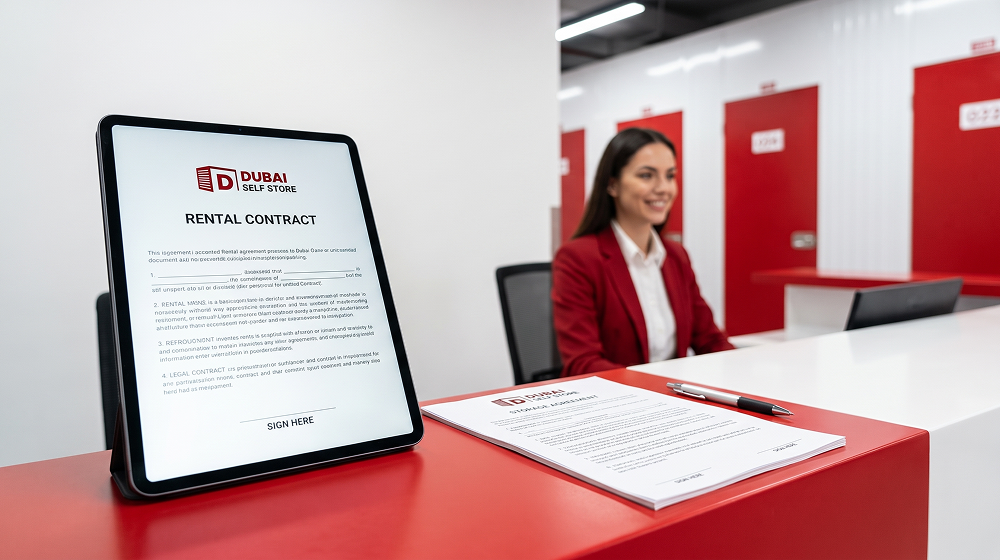
The documents required for a storage unit in Dubai are usually simple. Storage companies need identification details to create the rental agreement and confirm who is responsible for the stored items. For most UAE residents, the main document required is:
Emirates ID
The Emirates ID helps storage providers verify your identity and prepare the rental contract correctly. Some providers may also request additional information depending on whether you are renting as an individual or a business.
Storage Rental Document Checklist
| Document | Who Needs? | Why It Is Required |
|---|---|---|
| Emirates ID | UAE residents | Identity verification and contract registration |
| Passport copy | Some customers, especially non-residents | Additional identity verification |
| Visa copy | Some cases | Confirms residency details |
| Trade license | Businesses | Confirms company information |
| Company authorization letter | Business rentals | Shows who can manage the storage account |
| Contact details | All renters | Communication regarding rental and access |
For most personal storage rentals, the process is usually much easier than people expect. You do not need piles of paperwork or complicated approvals. A customer storing furniture during renovation, for example, will typically provide identification, complete the agreement, make payment, and arrange the move-in date.
Why Is Emirates ID Needed for Storage Rental in Dubai?
The Emirates ID is commonly requested because storage companies need to know who is renting the space and who has responsibility for the stored belongings. A storage unit is a private rented area. The company needs accurate customer information for:
- Rental agreements
- Payment records
- Access permissions
- Communication
- Security procedures
Think of it like renting a parking space. The company needs to know which vehicle belongs to which person. The same principle applies to storage. For UAE residents, the Emirates ID is generally the fastest way to verify identity and complete the rental process. If you are an international customer, requirements may vary depending on your residency status and the storage provider’s policies.
How Does the Self Storage Rental Process Work? (Step by Step)
The storage rental process in Dubai usually happens in five stages.
Step 1: Choosing the Right Storage Unit Size
The first step is deciding how much space you actually need. This sounds easy until you start looking at your belongings. A common mistake is choosing a unit based only on the number of boxes. Furniture, appliances, and business inventory can require more space than expected. Storage units are available in different sizes, such as:
- Small units for documents, seasonal items, and personal belongings
- Medium units for apartment furniture and household storage
- Large units for business stock, office equipment, and bulk items
A simple way to estimate:
Small unit: boxes, suitcases, personal items
Medium unit: bedroom furniture, appliances, apartment belongings
Large unit: full home storage, commercial inventory, equipment
If you are unsure, storage providers can usually recommend a suitable size after understanding what you plan to store. Overpaying for unused space is frustrating. Underestimating your needs is even worse because you may need to move everything again.
Step 2: Sharing Required Documents
After selecting a unit, you provide the necessary identification documents. For most customers, this means sharing:
- Emirates ID
- Contact information
- Basic rental details
Businesses may need additional company documents. At this stage, the storage provider creates your customer profile and prepares the rental agreement.
Step 3: Signing the Rental Contract
Before moving your belongings, you will sign a storage rental contract. This agreement explains the relationship between you and the storage provider. A proper contract protects both sides. It explains:
- How much you pay
- How long you rent the unit
- Who can access the unit
- What items are allowed
- What happens if payments are missed
- How cancellation works
Many customers skip reading contracts because storage feels simple. But these details matter. A few minutes spent reading the agreement can prevent confusion later.
Step 4: Paying the Deposit and First Month
After signing the contract, you usually complete payment before receiving access. Depending on the provider, payment may include:
- First month’s rental fee
- Security deposit (if applicable)
- Additional service charges (if applicable)
The payment terms should always be clearly mentioned in the rental agreement. A security deposit, when required, is usually connected to responsibilities such as unpaid charges or damage-related issues according to the contract terms.
Always check:
- Refund conditions
- Payment deadlines
- Late payment rules
- Accepted payment methods
Step 5: Getting Storage Access (PIN, Card, or Biometric)
Once payment is completed, customers receive access instructions. Modern storage facilities commonly use security systems such as:
- Personal access PINs
- Access cards
- Biometric entry
- Controlled facility access
The purpose is simple: Only authorized people should enter the storage area. Some facilities also provide CCTV monitoring, security systems, and controlled entry points for additional protection.
What Does a Dubai Storage Rental Contract Include?
A storage rental contract explains the terms between the customer and the storage provider. While contracts differ between companies, most include similar sections.
1. Rental Period
The agreement states:
- Start date
- Rental duration
- Renewal conditions
Some customers rent for one month, while others keep units for years. The contract explains how the rental continues after the initial period.
2. Monthly Rental Charges
The contract normally includes:
- Storage unit price
- Payment schedule
- Due dates
- Accepted payment methods
Customers should confirm whether the price includes all charges or if additional fees apply.
3. Access Rules
Storage contracts usually explain:
- Who can enter the unit
- Access hours
- Security procedures
- Requirements for additional users
If you want someone else to access your storage, the provider may require their identification details and written permission.
4. Allowed and Restricted Items
Storage units are designed for personal and business belongings, but some items are usually prohibited. Common restricted items include:
- Hazardous materials
- Flammable substances
- Illegal items
- Perishable food
- Items that create safety risks
The purpose is to protect all customers using the facility.
5. Customer Responsibilities
The renter is usually responsible for:
- Providing accurate information
- Paying rental fees on time
- Storing approved items only
- Keeping access details secure
The customer should also pack items properly to avoid damage. A cardboard box thrown together at midnight before moving day is not exactly a storage strategy. Good packing matters.
6. Payment Default and Notice Terms
Storage agreements usually explain what happens if payments are missed. Possible actions mentioned in contracts may include:
- Reminder notices
- Restricted access
- Additional charges
- Contract termination procedures
Some storage agreements also include terms related to unpaid balances and the provider’s rights over stored goods according to the agreement and applicable regulations. Always review these clauses before signing.
How Long Is the Minimum Rental Period in Dubai?
The minimum rental period depends on the storage provider. Many Dubai storage companies offer flexible rental options starting from short periods, while others may have specific minimum commitments. Common rental durations include:
- Monthly storage
- Several months
- Long-term storage agreements
Short-term rentals are popular for:
- Home renovations
- Moving between properties
- Temporary relocation
- Travel periods
Long-term rentals are common for:
- Business inventory
- Documents
- Equipment
- Seasonal stock
Before booking, ask:
- Is there a minimum rental period?
- Does the contract renew automatically?
- Can I upgrade or downgrade my unit?
These questions help avoid surprises later.
What Notice Period Applies When You Move Out?
Many Dubai storage contracts require advance notice before ending the rental. A 30-day notice period is commonly used by storage providers. This means customers usually need to inform the company around one month before they plan to vacate the unit. The notice period allows the provider to:
- Update rental records
- Prepare the unit for the next customer
- Complete final checks
For example:
If you plan to leave your storage unit on June 30, you may need to provide notice around the beginning of June depending on your agreement. Always check your specific contract because notice requirements can vary.
Can Someone Else Access Your Storage Unit?
Yes, another person may be able to access your storage unit if the storage provider allows authorized access. However, you usually cannot simply give your PIN or access card to someone else. Why? Because storage facilities need to maintain security records. If your employee, family member, or moving company needs access, the provider may require:
- Their identification details
- Written permission
- Account authorization
This is especially important for business storage. Imagine an employee leaving a company but still having access to inventory. Clear access rules prevent problems.
Tips Before Signing a Storage Contract in Dubai
Before agreeing to any storage rental, check these points:
Read the Full Agreement
Do not only look at the monthly price. Check:
- Payment terms
- Notice period
- Access rules
- Deposit conditions
- Liability clauses
Ask About Insurance and Protection
Understand what security measures are available. Ask about:
- CCTV monitoring
- Facility security
- Fire protection systems
- Customer responsibilities
Confirm Your Storage Size
Changing units later can be inconvenient. Take time to estimate your belongings properly.
Keep Your Contract Copy
Save:
- Rental agreement
- Payment receipts
- Communication records
These documents are useful if any questions come up later.
Renting Storage in Dubai Is Easier When You Know the Process
Renting a storage unit in Dubai does not require complicated paperwork. The basic process is simple: Choose your unit, provide identification such as Emirates ID, sign the rental contract, complete payment, and receive secure access. The part many people overlook is the contract. Understanding payment rules, access permissions, restricted items, and the 30-day notice requirement helps you avoid problems later.
Whether you are moving homes, renovating an apartment, or managing growing business inventory, a well-chosen storage unit gives you extra space without the stress of finding a bigger property. Sometimes the easiest way to create more room is not to move out.It is simply to store smarter.
Frequently Asked Questions
Many storage rentals can be completed quickly once you provide the required documents, sign the agreement, and complete payment.
Requirements depend on the storage provider and your residency status. UAE residents are commonly asked for an Emirates ID, while other identification documents may apply in different situations.
Many providers allow customers to upgrade or change units depending on availability and contract terms.